

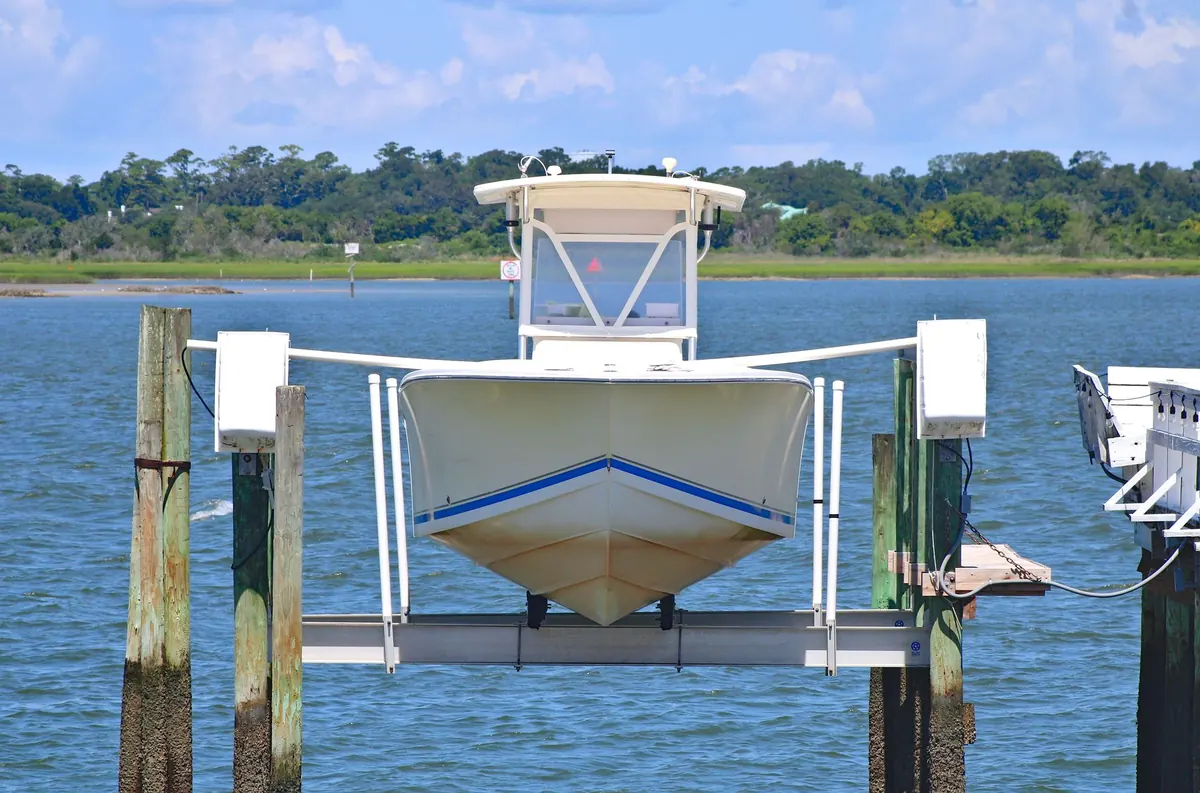
The yard smells of antifouling and strong coffee again, and every hull on the hard seems to be waiting for the same appointment with the travel lift. Spring commissioning is the part of boat ownership that rewards patience. Give it two careful weekends now and you will spend the summer sailing rather than hunting down a drip, a soft turnbuckle or a chartplotter that died quietly over winter. What follows is the sequence worth working through on a coastal cruiser: a boat kept in salt water, in tide, within a day or two of a safe harbour.
Start Below the Waterline
Everything else depends on the hull being sound and the running gear staying where it belongs. Work from bow to stern so nothing gets skipped, and photograph each stage. Next spring those pictures will answer the question of whether that crack in the keel fairing was always there.
- Bottom paint. Look for flaking, blistering and hard growth along the waterline. Sand and fair the rough patches, confirm the new antifouling is compatible with what is already on the hull, and wipe down with solvent where the yard permits it.
- Keel and keel bolts. A thin seam at the keel-to-hull joint is common. A gap, weeping rust or a star of cracks is not. Check accessible bolts or studs for corrosion and torque them to the builder's figures rather than to feel.
- Through-hulls and anodes. Open and close every seacock by hand. Replace stiff or cracked hoses and fit double stainless clamps with the screw heads offset. Renew sacrificial anodes once they are half consumed, and choose the alloy that matches your water and your mixed metals.
- Propeller, shaft and rudder. Check feathering or folding blades for play, look for fishing line packed behind the prop, feel for movement in the cutlass bearing, and lift the rudder to test the stock.
Tie a soft wooden plug to every seacock before launch. It is a two-minute job that turns a failed hose from an emergency into an inconvenience.
Rigging, Deck and Canvas
Standing rigging usually fails where you cannot see it from the cockpit, so go aloft or hire someone who will. On a coastal boat that has spent a decade in salt air, a professional rig inspection every few years is money well spent.
What to look for aloft
- Swage fittings with hairline cracks, rust bleeding from the cone, or the first sign of a meat hook where strands have broken.
- Turnbuckles with bent threads or too few threads engaged. Fit new cotter pins or ring pins, and never rely on tape.
- Chainplates where they pass through the deck. Crevice corrosion hides under sealant, and a brown stain on the bulkhead below is a warning worth chasing.
- Masthead sheaves worn flat, spreader tips where the wire sits loose, and rivets that have started to weep.
Then work down through the running rigging. Run every halyard and sheet hand over hand, looking for chafe where it passes rope clutches and blocks. Service the winches: strip them, clean out the old grease, check the pawls and springs, and rebuild with fresh lubricant. Inspect lifelines, stanchions and their bases, and push on the pulpits with real weight. Canvas and sprayhoods deserve the same attention — zips, stitching and press studs all fail quietly over winter.
Engine, Fuel and Water Systems
Start the engine before the boat goes in, with a hose feeding the raw water intake and a bucket under the exhaust. A problem is much easier to solve on the hard than at anchor in a swell.
Change the raw-water impeller even if it looks sound; they fail from age as often as from wear. Check the inside of the pump cover for scoring. Replace fuel filters, drain any water from the separator, and look closely at the fuel itself — if it is dark or smells varnished, polishing or replacing it now costs less than a blocked injector later. Inspect belts for glazing, hoses for soft spots, and the exhaust elbow for rust-through. Top up coolant, check the gearbox oil, and confirm the shaft gland drips at the rate the manufacturer specifies.
Below the sole, flush and refill the freshwater tanks, recommission or pickle the watermaker, test the holding tank and macerator, and run the bilge pumps with a bucket of water so both the float switch and the manual backup get exercised.
Electronics and Navigation
Electronics rarely fail at the dock. They fail in fog, at dusk, or on a lee shore. Test the VHF properly — transmit on low power to a nearby station, or use the DSC test call if your set offers one — and check the antenna connection both at the masthead and behind the panel. A spare handheld in the chart table is cheap insurance.
- Chartplotter and charts: latest update installed, and check the internal backup battery on older units.
- Depth sounder and speed log: paddlewheel cleaned, transducer face free of paint.
- Radar and AIS: targets showing, and own-ship data (MMSI, name, dimensions) correct.
- Autopilot: clutch, compass calibration, and a proper trial in open water.
- Navigation lights: sidelights, stern light, masthead tricolour and all-round white, plus a spare bulb set.
- Batteries and charging: load test house and start banks, clean and grease the terminals, and verify alternator and shore charger output.
While you are inside the panel, tidy the wiring and label the fuses. Future you, crouched in the dark with a torch, will be grateful.
Safety Equipment
Safety gear is the one category where a checklist beats memory. Lay everything out on the saloon table and go through it with the people who actually sail with you.
- PFDs: fit each one to its intended wearer, check zips and buckles, inspect inflatable cylinders and note the re-arm kit dates.
- Flares and EPIRB: check expiry dates, and update the beacon's registration details if you have moved or changed boats.
- Fire extinguishers: gauge in the green, securely mounted, in date, and the engine room port clear.
- Liferaft: service due date, and stowed where it can genuinely be launched.
- Jacklines, tethers and harnesses: inspect stitching and webbing, and rig jacklines before the first offshore leg, not during it.
- First aid kit and seasickness supplies: replace anything opened or out of date.
- Damage control: soft wooden plugs, a bung kit, spare hose and clamps, and a working crash pump.
Insurance, Paperwork and Launch Day
Read the policy before the season starts, not after a claim. Confirm the lay-up period end date, the navigational limits you are covered for, and that the named skipper matches who will actually be sailing. If you have changed anything significant — new electronics, a repower, a different mooring — tell the insurer, because undisclosed changes are a common reason claims get disputed. For anything specific to your policy or local registration rules, ask your broker or a qualified adviser rather than a forum thread.
Keep copies aboard of the registration or documentation, the insurance certificate and the most recent survey, and store the policy number and claims line in your phone. Then look at the tide and the forecast for launch day itself. A rising tide and light winds make the first hour a great deal calmer, and there is no prize for being the first boat in the water.
The Shakedown Run
Keep the first trip short and deliberate. Motor out at varying loads, checking for leaks and unusual noises, then sail for an hour and anchor for lunch. Run the windlass, test the heads, light the stove, and switch every instrument on and off. Write down whatever misbehaves in a notebook kept at the chart table. Fix the small things while they are still small, and by the time the first proper coastal passage arrives, the boat will feel like yours again.
Photo: Miguel Delima / Pexels